
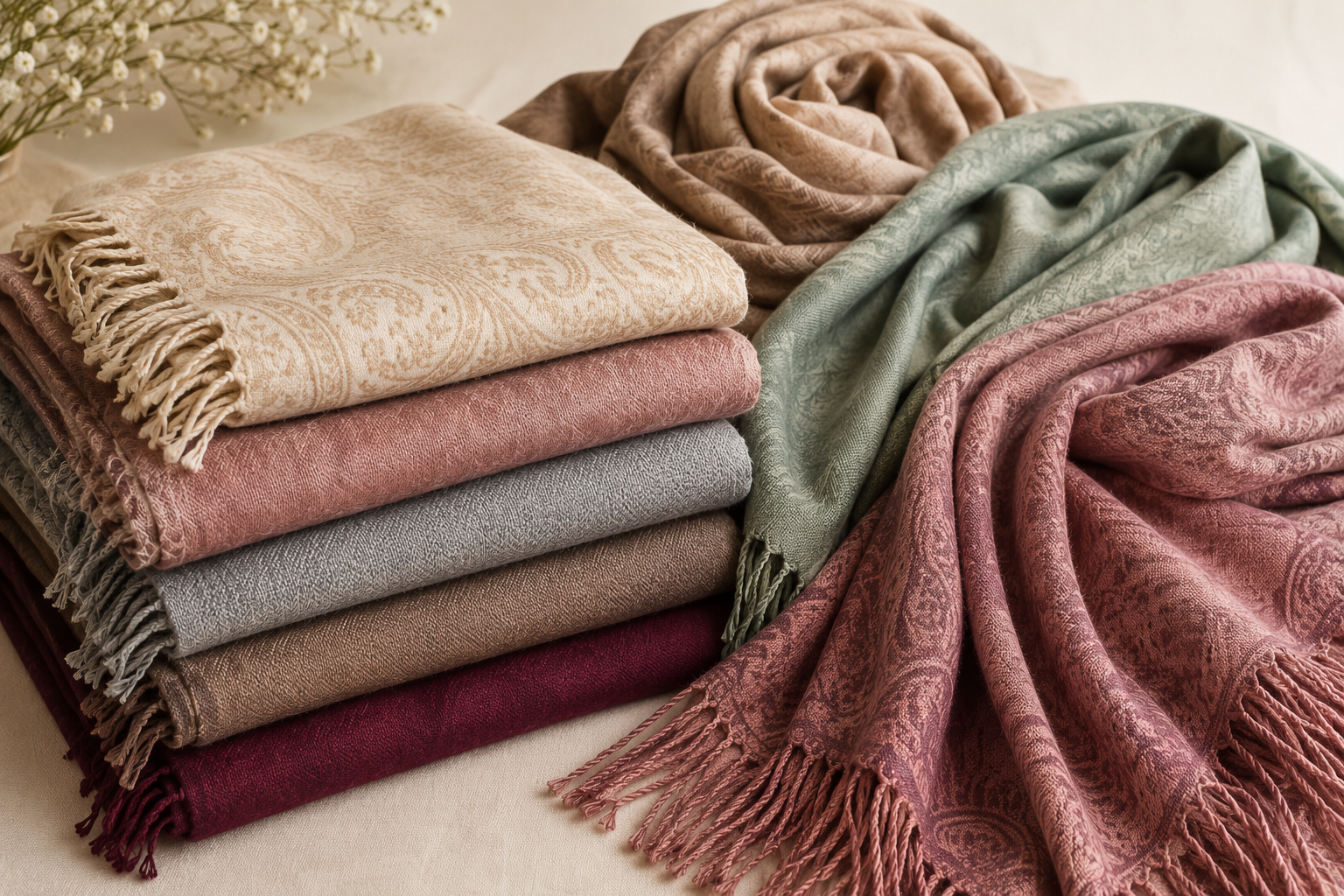
How to Take Care of Pashmina Shawls:
A Complete Guide to Keeping Them Soft and Beautiful
A genuine pashmina shawl is more than just a beautiful accessory. Made from exceptionally fine natural fibers, pashmina is known for its softness, warmth, elegance, and delicate texture. With the right care, a quality pashmina shawl can remain beautiful for many years.
However, because pashmina fibers are delicate, they require more attention than ordinary wool or synthetic fabrics. Washing it incorrectly, storing it carelessly, or exposing it to excessive heat can affect its softness, shape, and appearance.
In this guide, we’ll explain how to take care of pashmina shawls, including washing, drying, storing, removing wrinkles, dealing with stains, and protecting your shawl from common sources of damage.
Why Does Pashmina Need Special Care?
Pashmina is made from very fine natural animal fibers. These fibers are delicate and can be affected by excessive friction, heat, harsh detergents, and improper handling.
Regular care helps preserve:
- The softness of the fibers
- The original shape of the shawl
- Its natural warmth
- The appearance of embroidery and embellishments
- The overall quality and longevity of the fabric
The most important rule is simple: handle your pashmina gently.
How to Wash a Pashmina Shawl
Washing is one of the most important parts of pashmina care. Before washing your shawl, always check the manufacturer’s care instructions, particularly if it contains embroidery, embellishments, or blended fibers.
1. Check the Care Label
Start by checking the care label. Some pashmina shawls may require professional dry cleaning, while others can be gently hand washed.
If the label specifically recommends dry cleaning, follow those instructions.
2. Use Cold or Lukewarm Water
If your shawl is suitable for hand washing, fill a clean basin with cold or lukewarm water.
Avoid hot water. High temperatures can cause delicate natural fibers to shrink, felt, or lose their original shape.
3. Choose a Mild Detergent
Use a gentle detergent designed for wool, cashmere, or other delicate fabrics.
Avoid:
- Bleach
- Strong detergents
- Fabric softeners
- Harsh stain removers
- Products containing strong chemicals
You don’t need a large amount of detergent. A small quantity is generally sufficient for delicate fabrics.
4. Soak Gently
Place the pashmina shawl in the water and allow it to soak for a short period.
Gently move the shawl through the water. Do not scrub, rub, or twist it aggressively.
Excessive friction can damage the delicate fibers and may cause pilling or felting.
5. Rinse Carefully
Drain the soapy water and rinse the shawl with clean, cool water until the detergent has been removed.
Avoid repeatedly squeezing or twisting the fabric.
How to Dry a Pashmina Shawl
Drying is just as important as washing.
Never Wring the Shawl
One of the biggest mistakes people make is twisting or wringing a wet pashmina.
Wet fibers are particularly vulnerable to stretching and distortion. Instead, gently press out excess water.
Use a Clean Towel
Lay a clean, dry towel on a flat surface. Place the shawl on top and gently roll the towel with the shawl inside.
Press lightly to help absorb excess moisture.
Then unroll the towel and remove the shawl.
Dry It Flat
Place the shawl flat on a clean, dry towel or another suitable flat surface.
Gently reshape it while it is damp.
Avoid hanging a wet pashmina on a clothes hanger because the weight of the water can stretch the fabric and distort its shape.
Keep It Away From Direct Heat
Do not dry your pashmina directly under strong sunlight or near a radiator, heater, dryer, or other intense heat source.
Allow it to air dry naturally in a well-ventilated area.
How to Remove Wrinkles From Pashmina
Pashmina can develop wrinkles after being folded or stored. Fortunately, you don’t necessarily need to iron it.
Steam Is Usually a Better Option
Gentle steaming can help relax wrinkles without applying direct pressure to the delicate fibers.
Keep the steamer at an appropriate distance and avoid saturating the shawl with excessive moisture.
If You Need to Iron It
If ironing is permitted according to the care label, use the lowest suitable temperature setting.
Place a clean, thin cloth between the iron and the pashmina to provide an extra layer of protection.
Never press a hot iron directly against a delicate pashmina shawl without checking its care instructions first.
How to Store Pashmina Shawls Properly
Proper storage can significantly extend the life of your pashmina.
Fold Instead of Hanging
For long-term storage, fold your pashmina neatly rather than hanging it.
A hanger can place unnecessary pressure on the fabric and may cause stretching, particularly around the shoulders.
Store It in a Breathable Fabric Bag
A breathable cotton or fabric storage bag is preferable to an airtight plastic bag for long-term storage.
The shawl should have enough airflow to avoid trapping moisture.
Keep It in a Cool, Dry Place
Store your pashmina somewhere cool, dry, and away from direct sunlight.
Avoid damp areas because moisture can encourage unpleasant odors and potentially contribute to fabric damage.
Protect It From Moths
Natural animal fibers can attract clothes moths and other fabric pests.
Keep your storage area clean and inspect your shawls periodically. If you use moth-repellent products, avoid placing strongly scented or potentially staining products directly against the shawl.
Natural cedar products can be considered as part of a broader storage routine, provided they don’t come into direct contact with the fabric.
How to Remove Stains From a Pashmina Shawl
Accidents happen, especially when wearing a light-colored shawl.
The key is to act gently and quickly.
For a Fresh Spill
Blot the affected area with a clean, absorbent cloth.
Do not rub the stain. Rubbing can push the substance deeper into the fibers and may spread the stain.
For difficult or valuable pieces, particularly embroidered or antique pashmina shawls, professional cleaning is the safer option.
Avoid Harsh Home Remedies
Popular stain-removal tricks involving bleach, strong chemicals, or aggressive scrubbing can permanently damage delicate fibers.
If you’re unsure how to treat a stain, consult a professional cleaner experienced with wool, cashmere, or luxury natural-fiber garments.
How to Prevent Pilling on Pashmina
Small balls of fiber, known as pills, can occasionally appear on natural-fiber garments.
Some pilling can occur because of friction, particularly around areas that frequently rub against other clothing, bags, or accessories.
To minimize pilling:
- Avoid excessive friction.
- Don’t wear the shawl continuously with rough-textured clothing.
- Store it separately from items with rough surfaces.
- Handle it gently.
- If pills appear, remove them carefully with a suitable fabric comb rather than pulling them by hand.
Never pull individual pills forcefully because doing so can remove or damage the underlying fibers.
Be Careful With Perfume and Cosmetics
Perfume, hairspray, makeup, creams, and other cosmetic products can potentially leave marks on delicate fabrics.
A simple habit can help: apply perfume and other products before putting on your pashmina and allow them to dry first.
This reduces direct exposure of the shawl to alcohol, oils, and cosmetic ingredients.
How Often Should You Wash a Pashmina Shawl?
Pashmina generally doesn’t need to be washed after every use.
Frequent washing can place unnecessary stress on delicate natural fibers. Instead, allow the shawl to air out after wearing it and wash it only when necessary, following the manufacturer’s care instructions.
If the shawl has no visible stains or unpleasant odor, gentle airing may be sufficient after occasional use.
Common Pashmina Care Mistakes to Avoid
Taking care of pashmina isn’t difficult, but a few common mistakes can shorten its lifespan.
Avoid these:
1. Washing with hot water
Heat can cause delicate fibers to shrink or felt.
2. Using harsh detergent
Strong chemicals can affect the softness and appearance of the fibers.
3. Wringing the shawl
Twisting can stretch and distort the fabric.
4. Using a tumble dryer
Heat and mechanical movement can be particularly harsh on delicate natural fibers.
5. Hanging it while wet
The weight of water can stretch the shawl.
6. Exposing it to direct heat
Radiators, heaters, and intense sunlight can affect natural fibers.
7. Scrubbing stains aggressively
Rubbing can damage fibers and spread the stain.
8. Storing it in a damp place
Moisture can lead to odors and fabric problems.
A Simple Pashmina Care Routine
You don’t need a complicated routine to keep your shawl looking beautiful.
After wearing your pashmina:
- Air it out before putting it away.
- Check for stains or spills.
- Fold it gently.
- Store it in a clean, breathable fabric bag.
- Keep it away from moisture and direct sunlight.
- Follow the manufacturer’s instructions whenever cleaning is necessary.
Final Thoughts
A beautiful pashmina shawl can become a treasured part of your wardrobe when cared for properly. The secret is gentle handling. Avoid excessive heat, friction, harsh detergents, and unnecessary washing.
When cleaning is required, follow the care label and choose the gentlest appropriate method. For valuable, heavily embroidered, antique, or especially delicate shawls, professional cleaning is often the safest choice.
With thoughtful washing, careful drying, proper storage, and regular gentle handling, your pashmina shawl can maintain its softness, elegance, and beauty for years to come.
Leave a Reply